
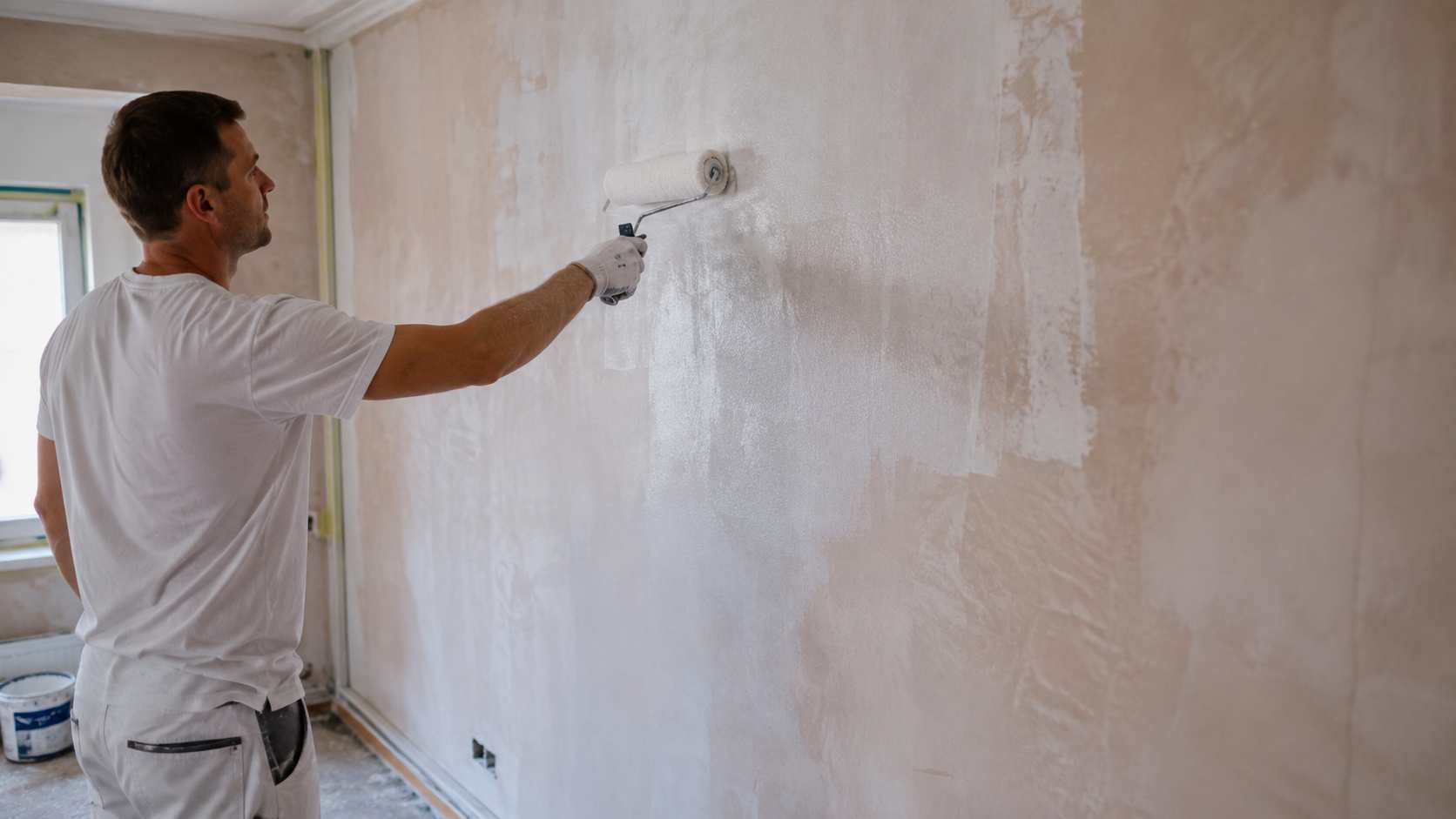
Which Paint Works Best on New Plaster?
Fresh plaster needs a diluted mist coat before any topcoat, and the wrong product at this stage causes peeling later. How long to wait, what to thin, and which paints to avoid.
Emulsion, eggshell, satinwood and gloss all exist for a reason, and using the wrong one is the most common cause of a finish that will not wipe clean or will not stop marking. These guides cover which paint belongs on which surface, how much you need, what primer and undercoat actually do, and why the cheap trade white is often the right call for ceilings.
Fresh plaster needs a diluted mist coat before any topcoat, and the wrong product at this stage causes peeling later. How long to wait, what to thin, and which paints to avoid.
Touch dry, recoatable and fully cured are three different stages, and the gap between them explains why fresh paint marks so easily. What affects drying and when a room is safe to use.
Primer and undercoat do different jobs and neither is needed on every surface. Which situations genuinely require one, which are marketing, and what happens when you skip a necessary coat.
Silk wipes clean more easily but shows every flaw in the wall behind it. How the two finishes compare on durability, appearance and forgiveness, and which rooms suit each.
Two coats is the standard answer but the honest one depends on the colour change, the surface and the quality of the paint. When a third coat is inevitable and when one will genuinely do.
A straightforward method for calculating wall and ceiling paint, how coverage figures on the tin compare with reality, and why porous surfaces swallow far more than the label suggests.
Wipeable, washable and scrubbable describe different levels of durability. What each term means in practice, how to clean painted walls without damaging them, and what no paint will withstand.
Trade ranges are usually cheaper per litre and sold in bigger tins, but the formulations differ from retail products in ways that matter. When trade is the better buy and when it is not.
Emulsion, eggshell, satinwood and gloss each suit particular surfaces and particular rooms. A plain guide to which interior paint belongs where, and why the wrong choice shows up within months.
Dedicated ceiling paints are formulated to drip less and cover in fewer coats, but ordinary trade matt often does the same job for less. What the differences are and when they matter.
Moisture resistant emulsions carry a premium over standard paint. What the extra money buys, whether it prevents mould on its own, and when a cheaper tin is perfectly adequate.
Eggshell sits between matt and satin in sheen and comes in both wall and woodwork grades. What the finish looks like in a real room, which surfaces suit it, and how it applies.