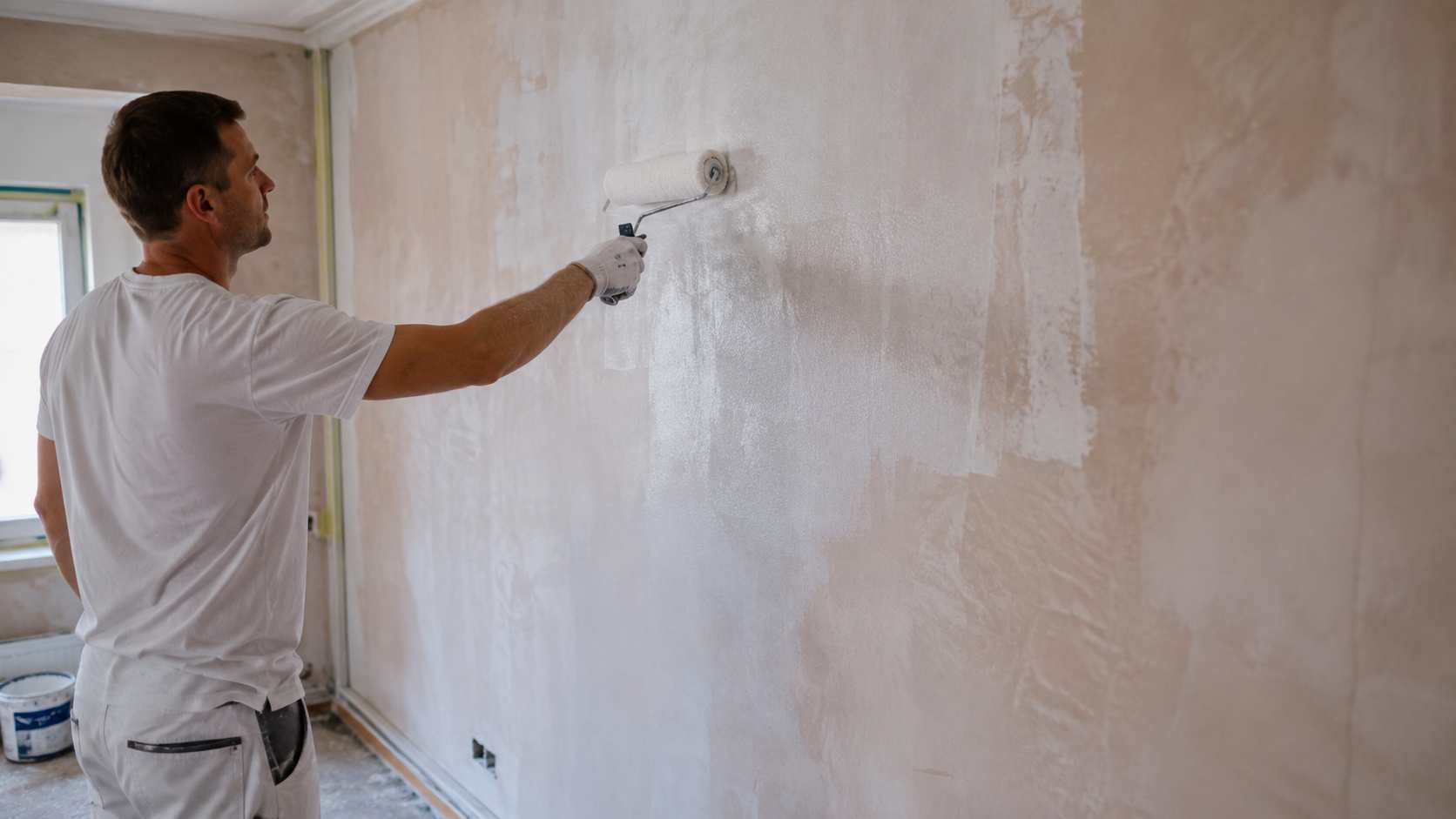
Running out of paint two thirds of the way up the final wall is a common and entirely avoidable irritation, and buying three times what you need is only marginally better. The calculation takes a few minutes and needs nothing more than a tape measure and the coverage figure printed on the tin.
How do you measure a room for paint?
Work out the wall area first. Measure the length of each wall, add them together to get the perimeter, then multiply by the height of the room. A room measuring four metres by three, with a ceiling height of two and a half metres, has a perimeter of fourteen metres and therefore thirty-five square metres of wall.
For the ceiling, multiply length by width. The same room gives twelve square metres. Keep the two figures separate, because you will usually buy different products for each.
Should you subtract doors and windows?
For a room with one door and one window, most decorators do not bother. The offcut allowance roughly balances the area you would have deducted, and having a little spare at the end is more useful than being precisely short.
Where it does matter is a room with large glazing, patio doors or several windows. A standard interior door is around one and a half square metres and a decent sized window about the same, so a room with three windows and two doors has perhaps seven square metres you can legitimately take off. On a thirty-five square metre wall area, that is a fifth of the job.
How far does a tin actually go?
Most emulsion tins quote somewhere between twelve and sixteen square metres per litre. Those figures are generated on a smooth, sealed, previously painted surface with a roller, applied by someone who does this for a living. They are achievable, but they are the best case rather than the average.
- Previously painted, sound walls will get close to the quoted figure
- Fresh plaster absorbs heavily and the first coat may cover half as far
- Bare plasterboard and filler patches drink paint in the same way
- Textured surfaces, including artex and heavy woodchip, have far more surface area than their measurements suggest
- Brush work into corners and around trim uses more than rollering
A sensible working assumption for a normal repaint is around ten to twelve square metres per litre per coat.
How many coats should you budget for?
Two coats is the standard expectation and the honest baseline for almost any colour change. Painting a similar shade over an existing one in good condition might get away with one, but you will not know until the first coat dries.
Three coats becomes likely when you are going from a dark colour to a light one, using a strong pigment such as a deep red or yellow, or working over patchy filler and bare plaster. Budget for three if any of those apply and treat the third tin as insurance rather than waste.
What does the calculation look like in practice?
Take the thirty-five square metres of wall in the example room. Two coats gives seventy square metres of coverage required. At eleven square metres per litre, that is around six and a half litres, so a five litre tin plus a two and a half litre tin covers it with a small amount left over.
The twelve square metre ceiling needs twenty-four square metres of coverage across two coats, which is comfortably inside a two and a half litre tin. Woodwork is harder to estimate by area, but a typical room with a door, frame and skirting is usually covered by a single 750 millilitre tin of satinwood over an undercoat.
Why is buying one large tin better than several small ones?
Cost per litre falls sharply as tin size increases, so five litres is almost always better value than two tins of two and a half. There is also a colour consistency argument, because tinted paint can vary very slightly between batches. Mixing your tins together in a larger bucket before you start, a practice decorators call boxing, removes that risk entirely on a large job.
Keep the leftovers sealed and labelled with the room name. Touching up a scuff two years later with the identical batch is far easier than trying to match a colour from memory.