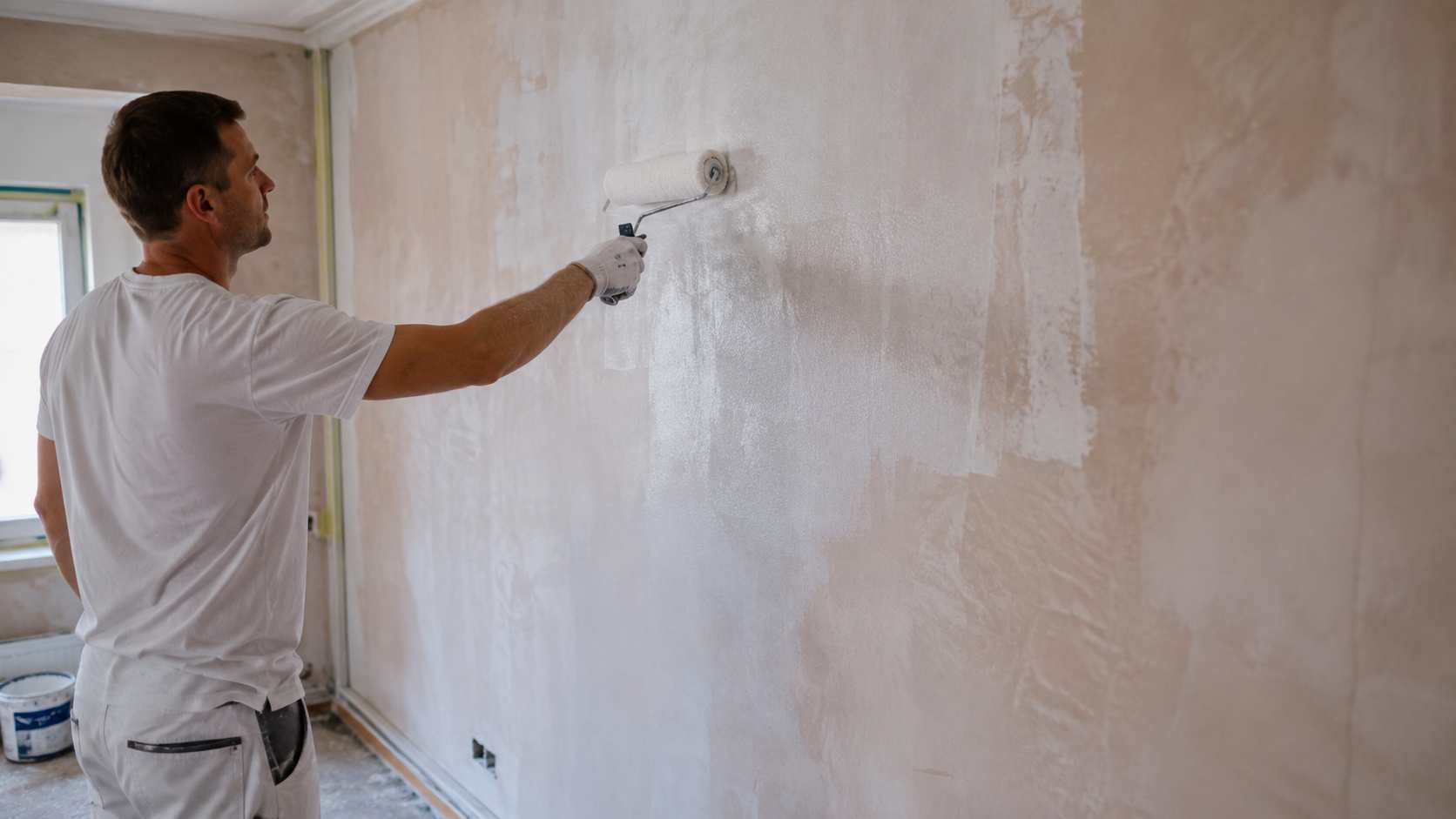
Two coats is the answer given on almost every tin and it is correct most of the time. The reason it is not always correct comes down to three variables: how far the colour has to travel from what is already there, how absorbent the surface is, and how much pigment the paint contains.
Why is two coats the standard?
A single coat of emulsion is a thin film, typically well under a tenth of a millimetre once dry. Even a well pigmented paint applied evenly will show slight variation in that thickness, and that variation is visible as patchiness when light crosses the wall.
The second coat evens out the film thickness and brings the colour to its true depth. It also produces a more consistent sheen, which is why a wall that looked acceptable after one coat looks noticeably better after two even when the colour appeared to have covered.
When will you need a third coat?
- Going from a dark colour to a light one, particularly white over navy, charcoal or a strong red
- Using a highly pigmented colour such as a deep yellow, orange or bright red, which have naturally poor opacity
- Painting over patchy filler or repair work, where the different absorbency shows through
- New plaster after a mist coat, where absorption is still uneven
- Very cheap paints with low pigment content, regardless of colour
Certain pigments are simply weak coverers by nature. Reds and yellows are the classic examples, and this is why a strong colour in those families sometimes needs a tinted basecoat in a related shade rather than another coat of the same paint.
Can you ever get away with one coat?
Occasionally. Refreshing a wall with exactly the same paint from the same batch, over a sound and clean surface, can work in a single coat, particularly if the wall is simply looking tired rather than marked.
One coat products exist and are heavily pigmented, and they do sometimes achieve it on a favourable surface with a modest colour change. They rarely manage it on a significant colour change, and they cost enough per litre that the saving is smaller than it appears.
How long should you leave between coats?
Most emulsions state two to four hours, and that figure assumes normal room temperature with reasonable ventilation. Cold rooms, high humidity and thickly applied paint all extend it.
Applying the next coat too early is a genuine risk rather than a technicality. The first coat is still soft, and a wet roller passing over it can lift and drag the film, leaving marks that need sanding out. If the surface feels cool to the back of your hand, moisture is still evaporating and it needs longer.
Does the order of work change how many coats you need?
It changes how many you appear to need. Painting ceilings first, then walls, then woodwork means overlaps are covered by later work rather than being cut in twice. Cutting in the edges of a wall and rolling while that cut is still wet blends the two together, whereas letting the cut dry first leaves a visible band of brushed paint that often needs a further pass to disguise.
Rolling in a consistent direction and maintaining a wet edge across the whole wall in one session matters more than most people expect. A wall painted in two halves an hour apart can show a join that no amount of additional coats fully removes.
How do you tell whether another coat is needed?
Wait until the paint is completely dry, because emulsion darkens as it dries and a wall that looks patchy while wet often evens out. Then look at it in daylight from an angle, and again in the evening with the lights on, since artificial light reveals different flaws.
Check the areas that commonly fall short: the top of the wall near the ceiling, behind where furniture stood, around light switches and along the skirting line. If those areas match the rest, you are finished. If the previous colour shows as a faint shadow anywhere, one more coat will settle it.