Pebbledash divides opinion architecturally, but practically it is a durable finish that takes masonry paint well. The two things worth knowing before starting are that it will consume far more paint than you expect, and that once coated it needs recoating indefinitely.
How much more paint does it use?
Considerably more, because the effective surface area is several times the measured area. Every stone presents multiple faces and there are shadowed gaps between them all.
Where smooth render might achieve twelve square metres per litre, pebbledash on a first coat can drop to four or five. A sensible working assumption is to double the quantity a standard calculation gives you, and to expect the first coat to take considerably more than the second.
What is the best way to apply it?
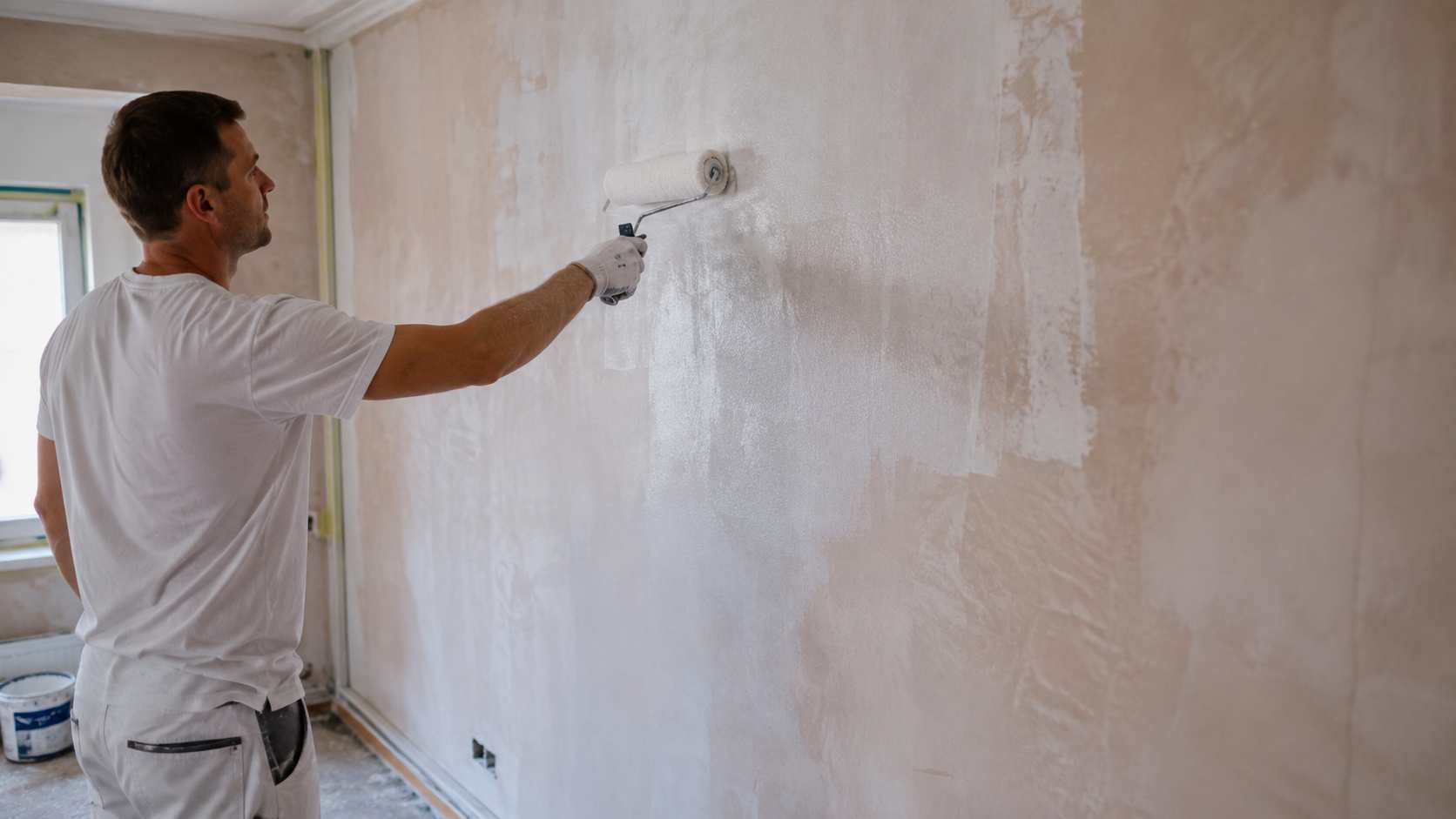
A long pile roller is the usual choice, at least twenty millimetres and often longer for a coarse dash. A short pile roller simply skates over the surface, coating the tops of the stones while leaving the recesses bare, which looks acceptable when wet and patchy once dry.
Many decorators work the paint in with a brush after rolling, or use a brush entirely on the first coat, to drive it into the gaps. Spraying covers quickly and is common on larger jobs, though back rolling or back brushing after spraying is still needed on the first coat to get proper penetration.
What should be checked before painting?
- Loose stones, which come away when brushed and indicate the dash is failing locally
- Hollow areas, found by tapping, where the render has lost its bond to the wall
- Cracks running through the render rather than just the surface
- Green algae growth, particularly on north facing and shaded elevations
- Chalkiness of any existing coating, tested by rubbing a hand across it
- Damp patches and their causes, including gutters, downpipes and ground levels
Why does previously painted pebbledash need care?
Old masonry paint on a textured surface degrades to a chalky powder under ultraviolet exposure, and the texture makes it harder to see and harder to remove. New paint applied over that powder bonds to loose material and will peel.
A stabilising solution is usually necessary on a previously painted dash that fails the hand test. It soaks into the friable surface and binds it, and it is applied generously because the texture absorbs it as readily as it absorbs paint.
Should you paint it at all?
The case for is straightforward. Painting evens out patchy repairs, brightens a dull grey elevation, adds a weather resistant layer and can transform the appearance of a house at moderate cost.
The case against is the commitment. Once coated, the dash cannot practically be returned to its original state, and the coating becomes a maintenance item every eight to twelve years, with all the access costs that involves. Unpainted pebbledash in sound condition needs essentially nothing.
There is also a breathability consideration on older solid walled properties, where a thick impermeable coating can trap moisture in the wall. Where that applies, a more breathable mineral or silicone based paint is the safer specification.
Can you repair damaged pebbledash?
Yes, though matching it is difficult. Patch repairs need a base render coat followed by fresh aggregate thrown onto it while wet, and the new stones rarely match the weathered original in colour or size.
This is one of the arguments people use in favour of painting, since a uniform colour disguises the patch entirely. Get the repairs done first, let them cure fully, which for render means several weeks, then coat the whole elevation. Painting a fresh repair too early traps moisture and produces a visible patch of a different sheen.
Is removing it an option?
It can be, but it is a significant job. Removal involves hacking off the render, which is dusty and heavy work, then discovering the condition of the brickwork underneath, which is often the reason the dash was applied in the first place.
Budget for repointing at minimum, and for the possibility that the brick is unattractive or damaged and will need rendering again. It is worth exposing a test area before committing to the whole elevation.